Fragmented Landscape (2024)
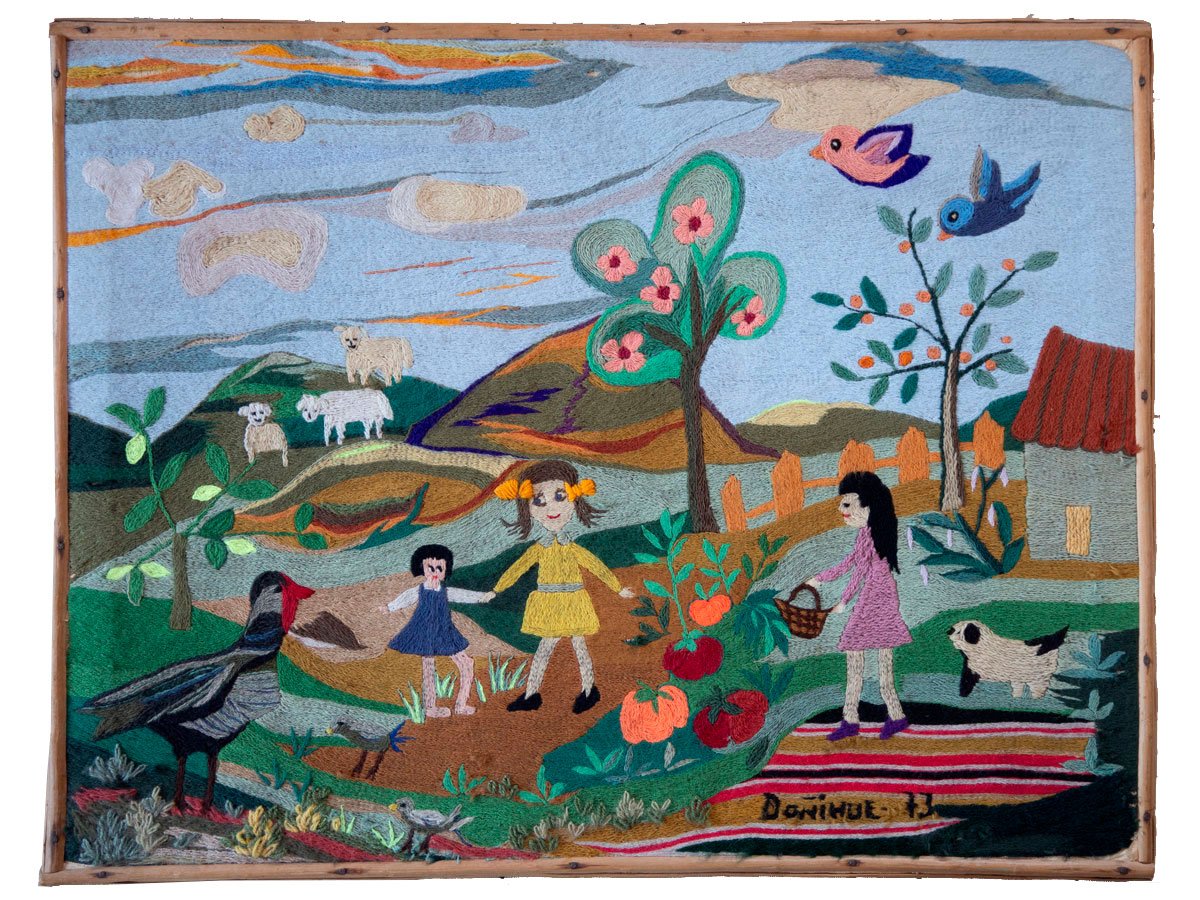
Doñihue 1973
(1973)
Irma Pulgar Campos
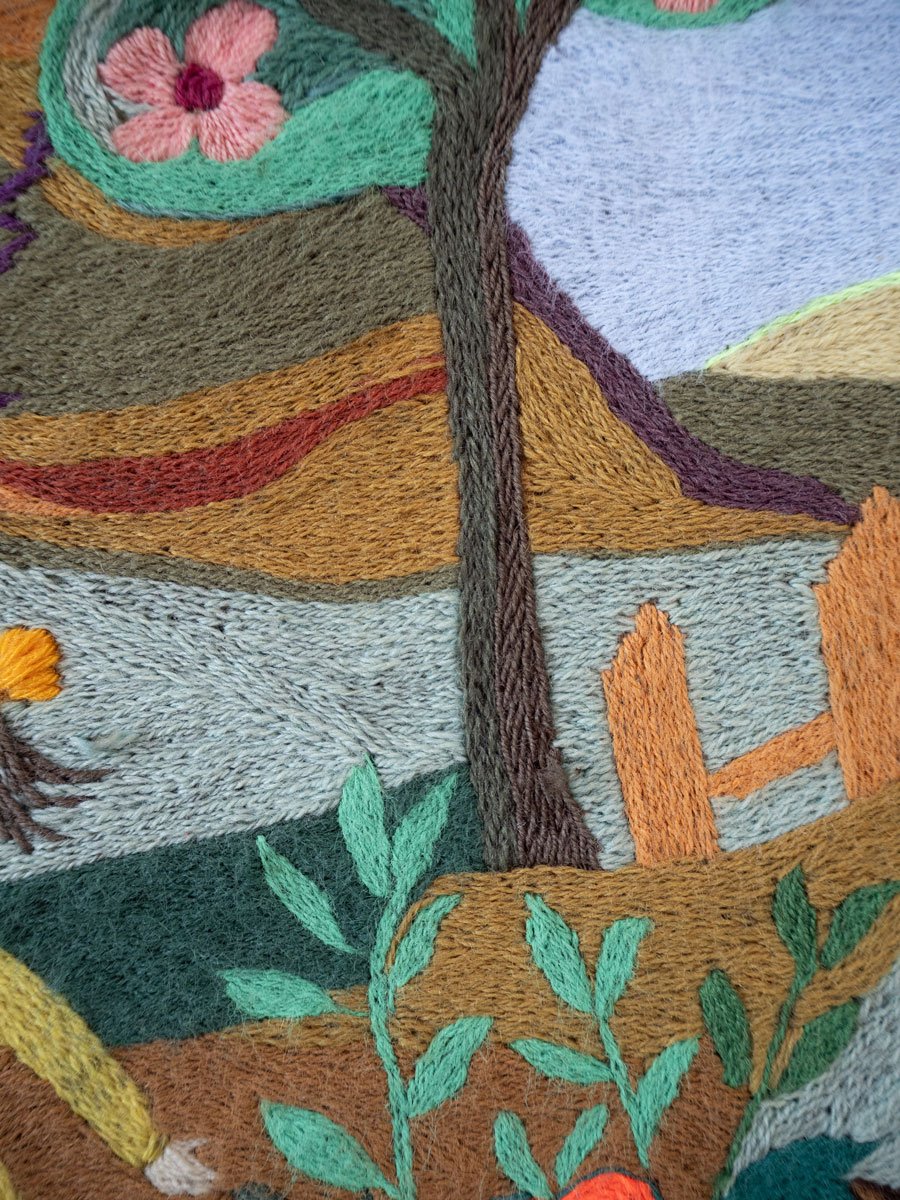
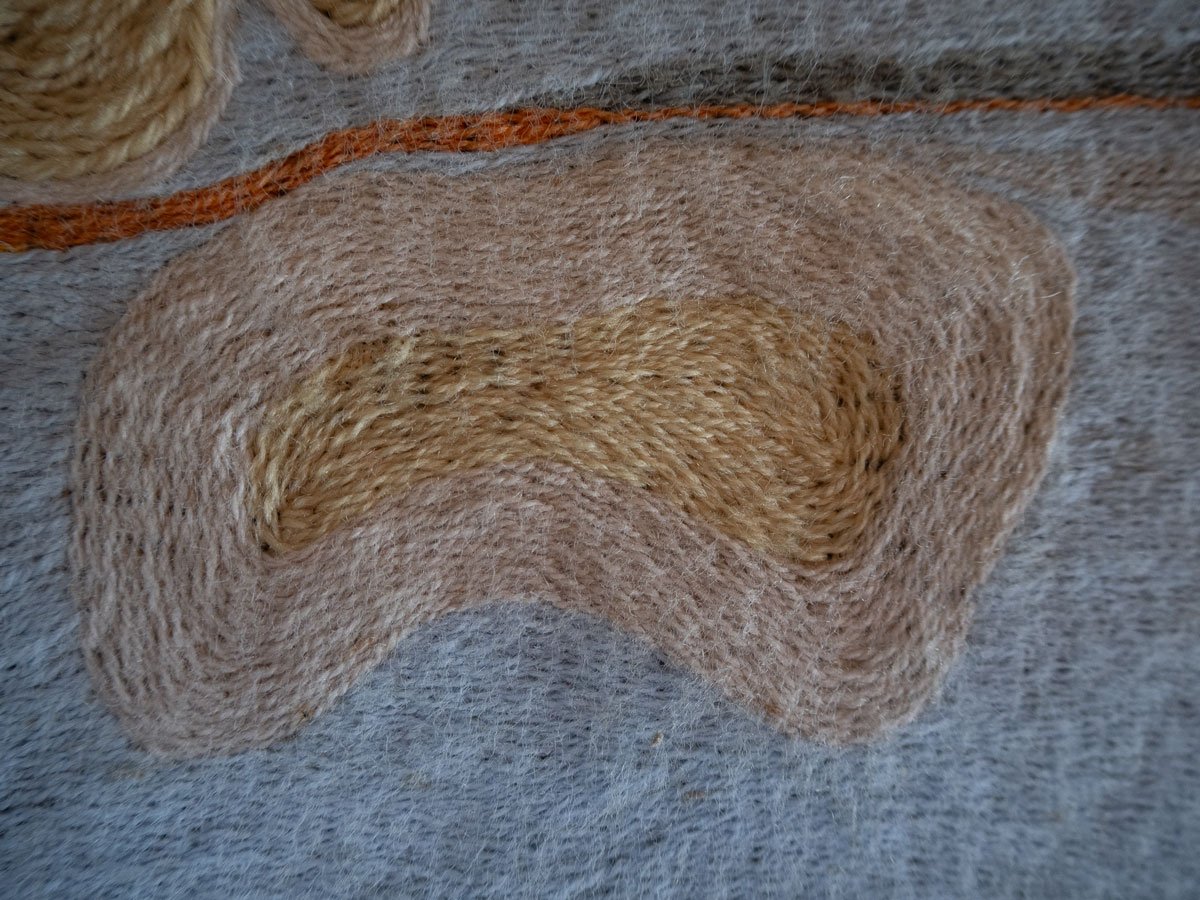
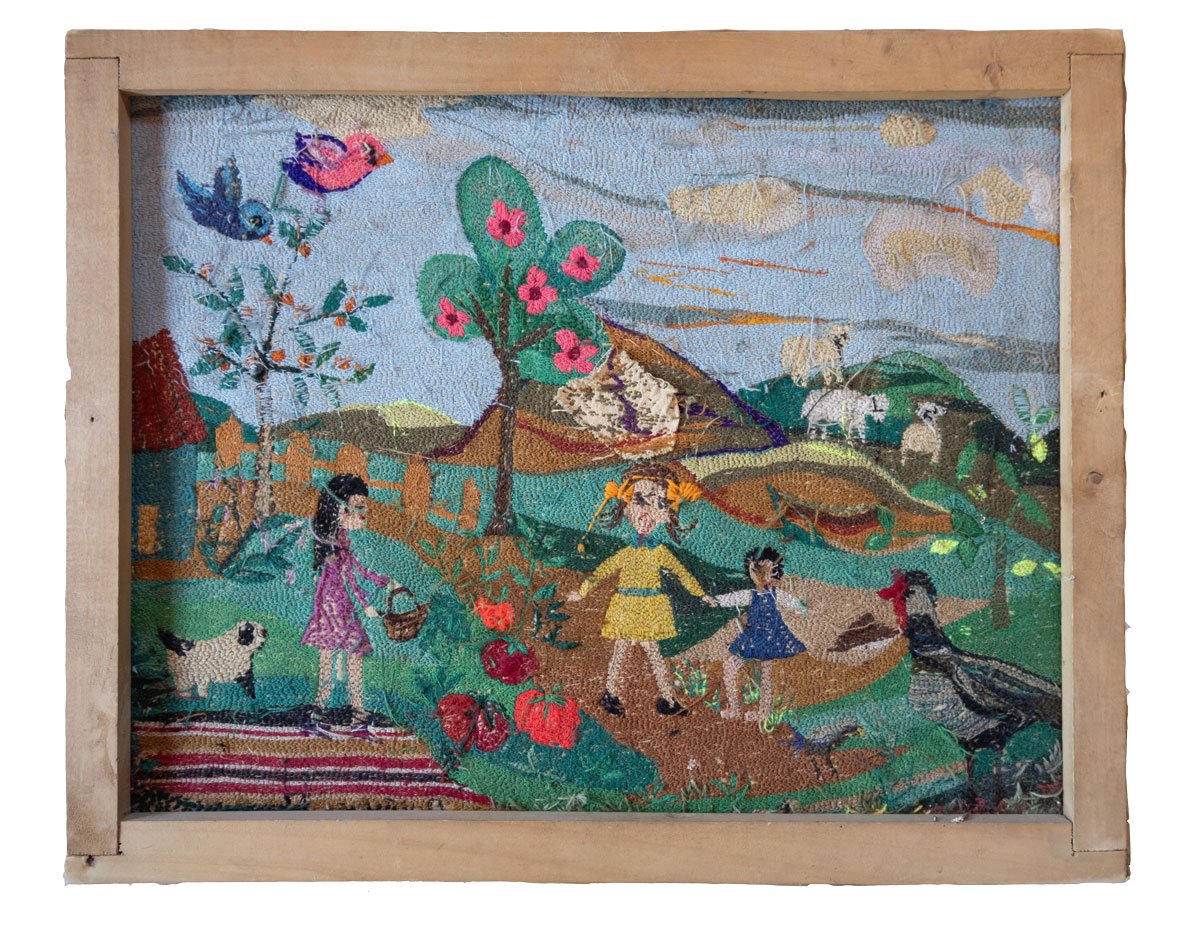
Arpillera embroidered cotton, wool, yute fabric, wooden frame.
60x75 cm
Fragmented Landscape
(2024)
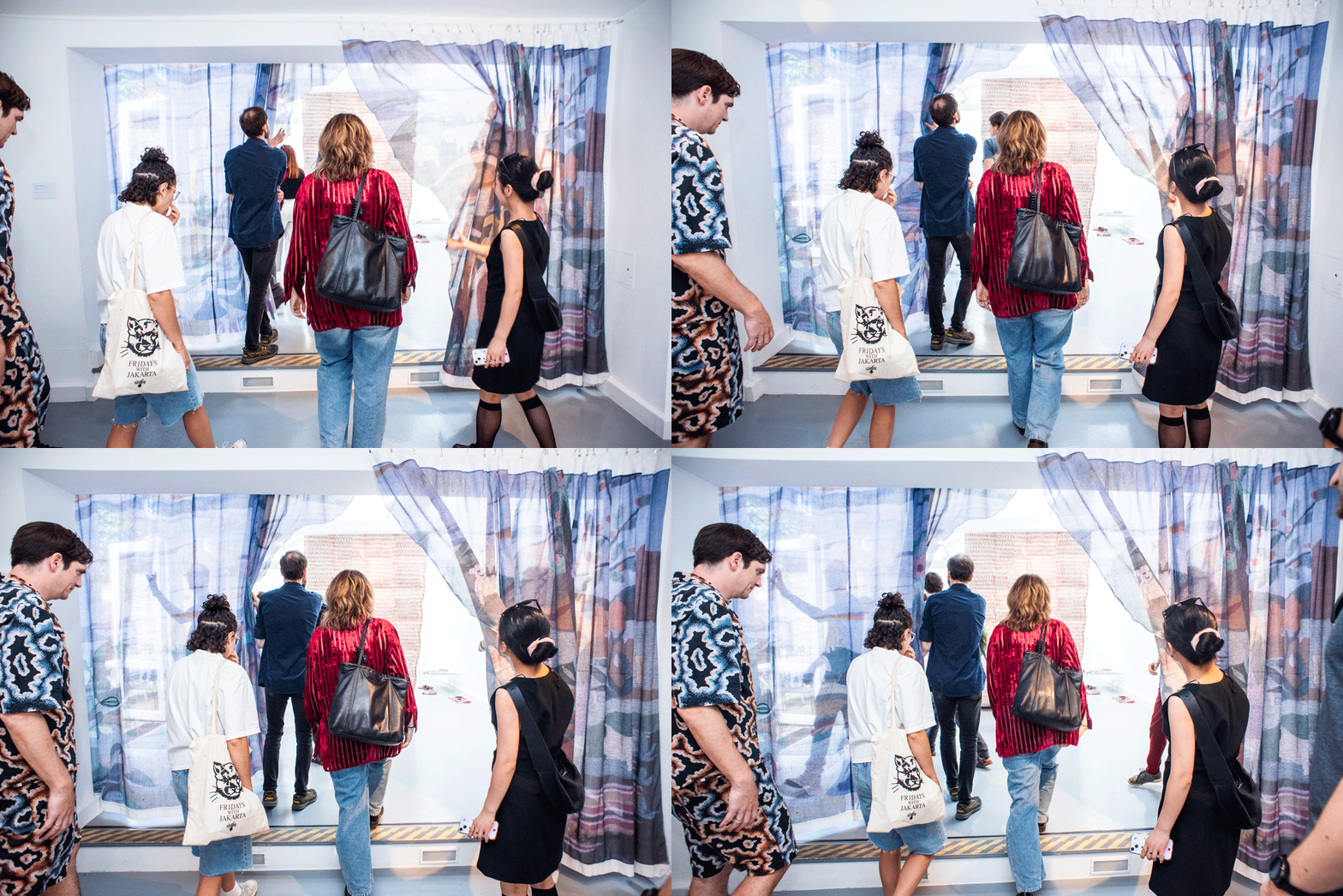
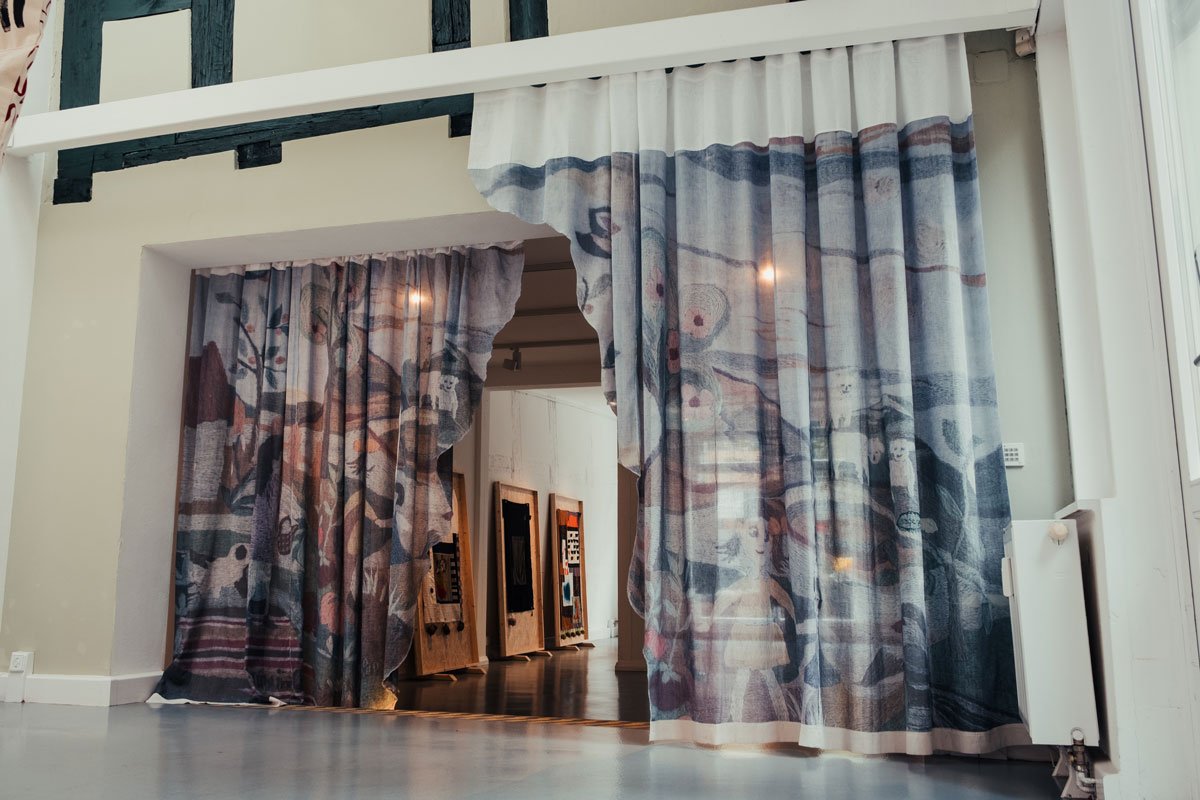
Digitalprint on Bambulina cotton fabric.
250x300 cm
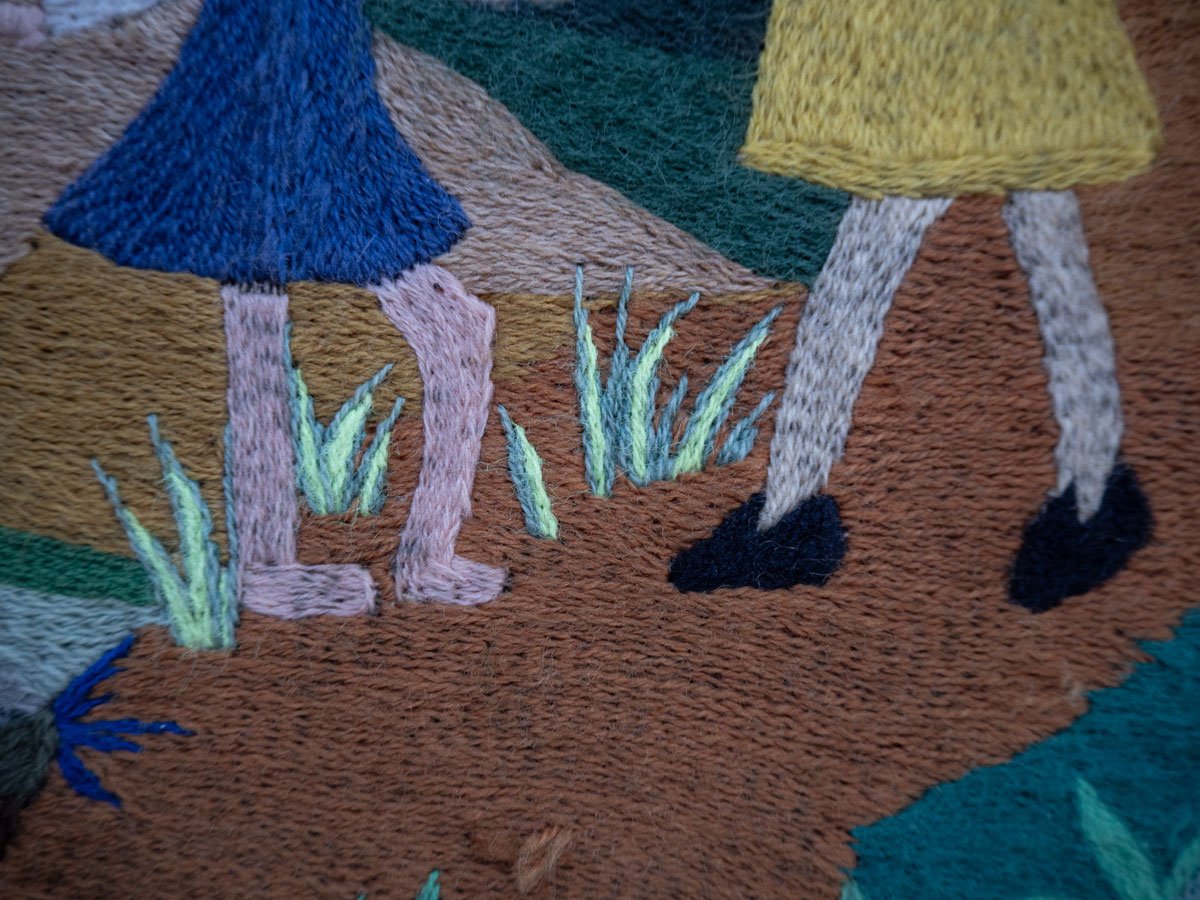
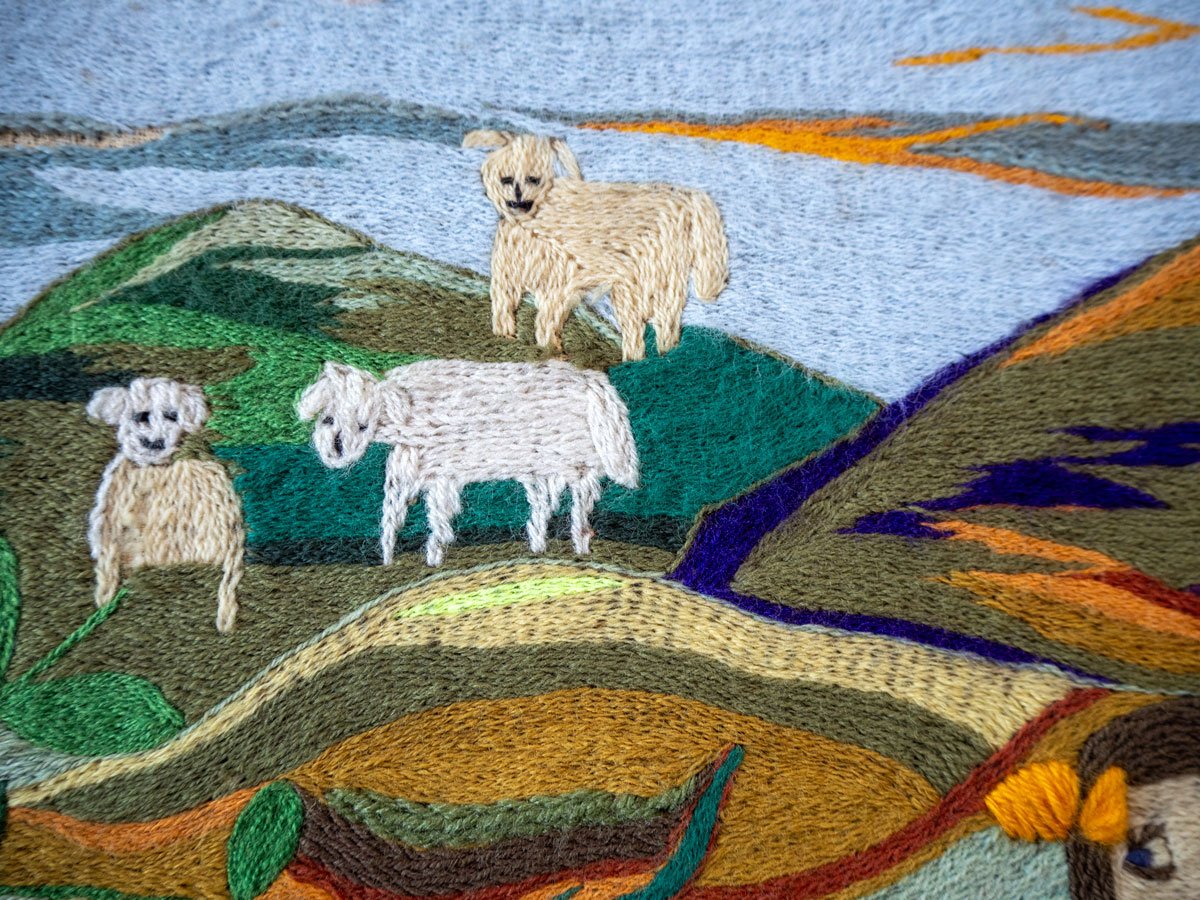
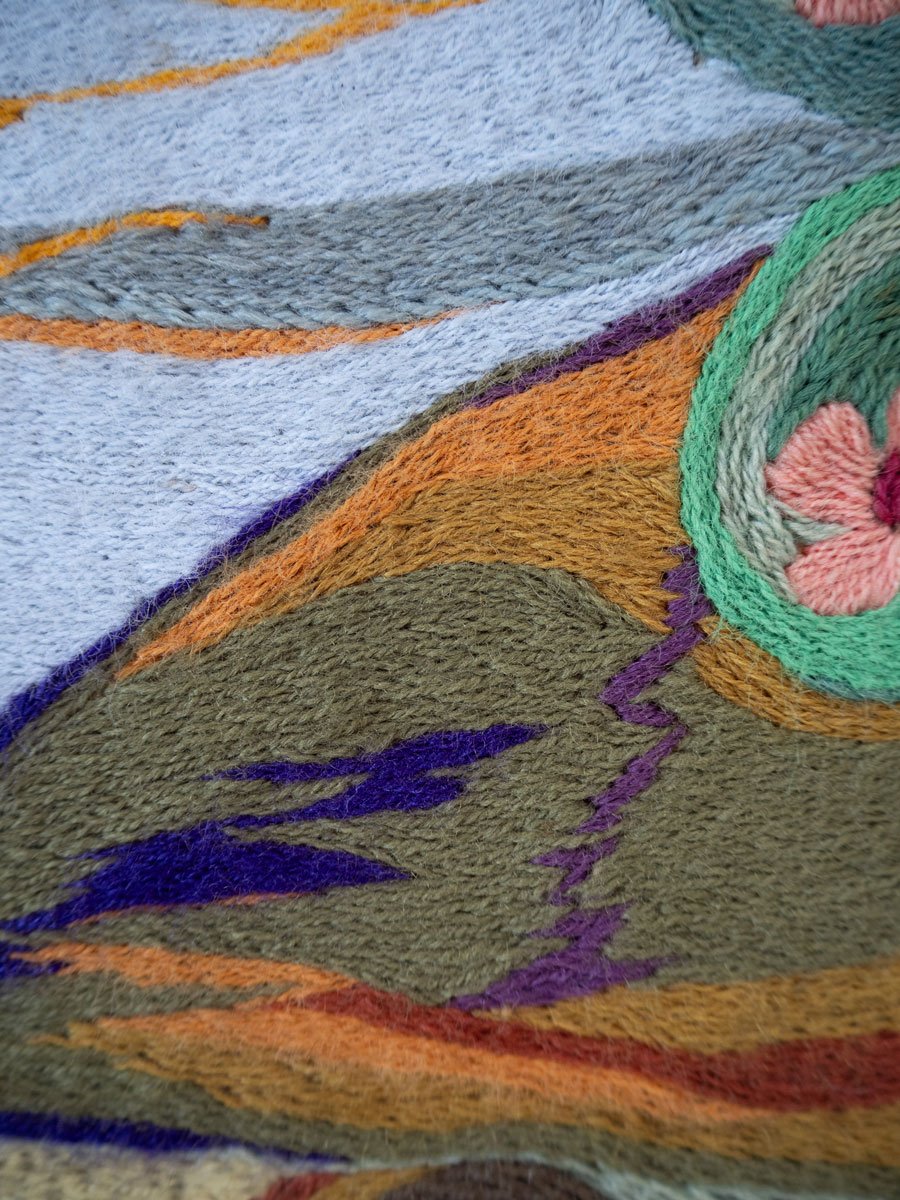
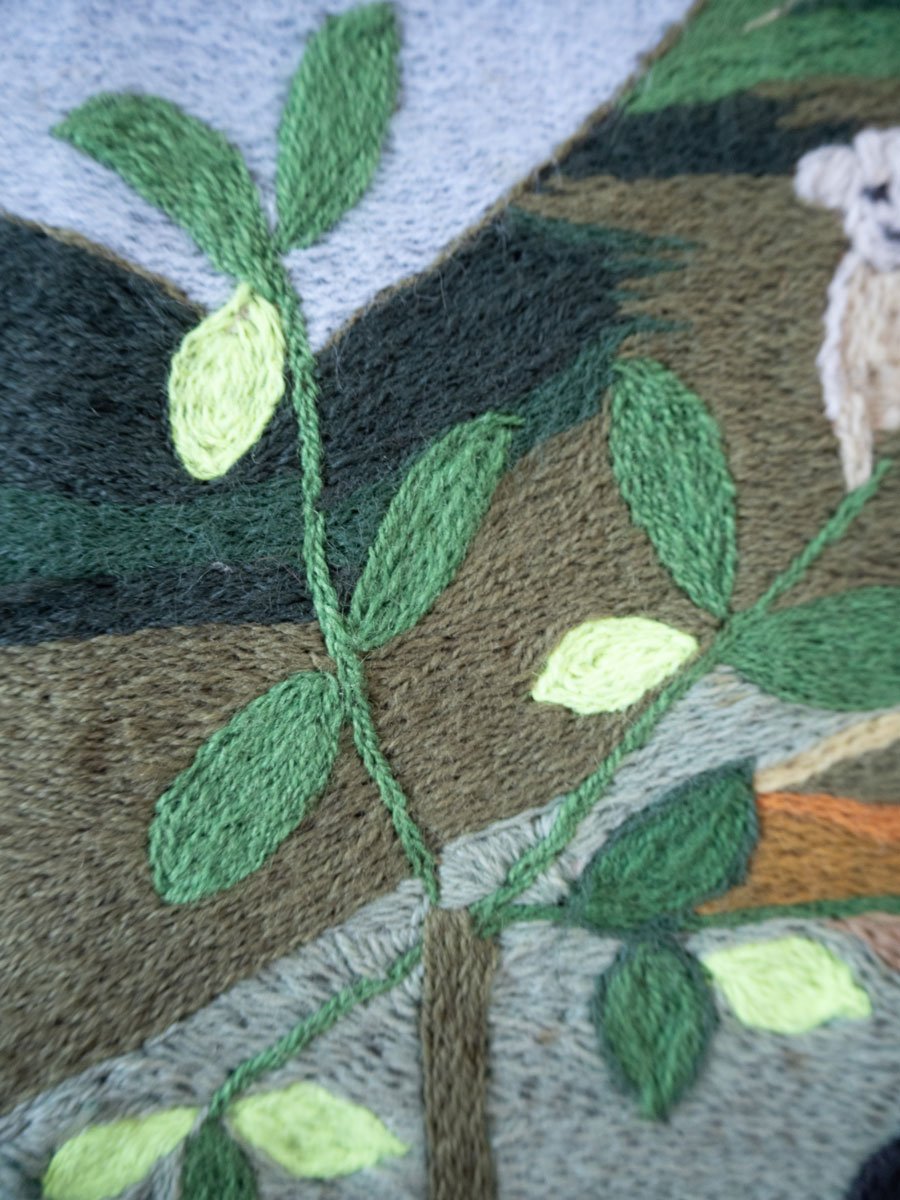
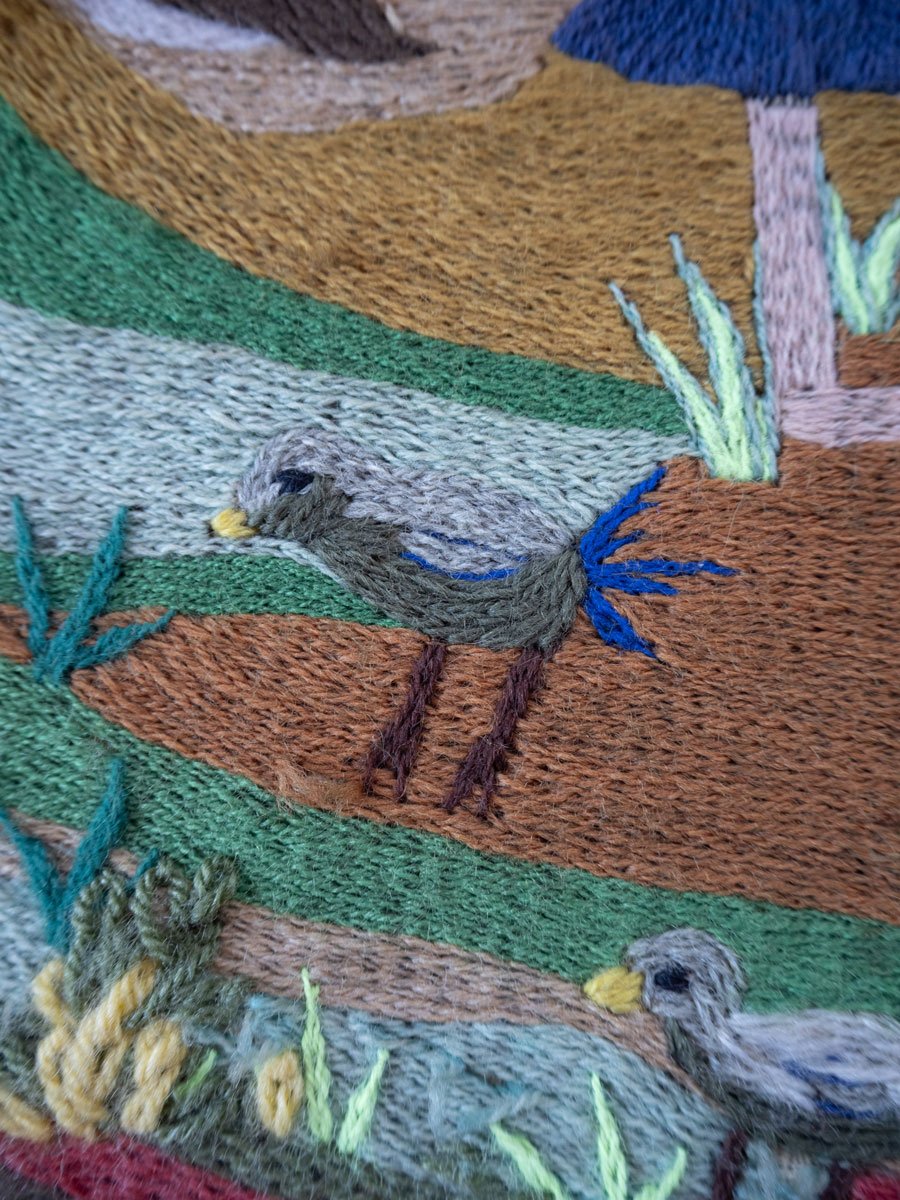
Fragmented Landscape (2024) weaves themes of memory, resistance, and intergenerational craftsmanship. In 1973, at the onset of Augusto Pinochet’s military dictatorship in Chile, my grandmother, Irma Pulgar Campos (1921–2004), created Doñihue, 1973—an arpillera, or embroidered textile scene. She was an art teacher in a rural school in central Chile. She asked her students to draw elements or motifs that represented the locality of Doñihue. There is the dog of one of the students, a Chamanto -traditional poncho worn by Chilean huasos-, the hills with their sheep and their soil of different colors, there is a Loica bird, a lemon tree, the huge summer tomatoes, an apple tree and an orange tree, and children playing and collecting the summer harvest.
My grandma’s original work portrays a harmonious rural landscape where people, animals, and nature coexist peacefully. What captivates me about this embroidery of hers is that, uniquely, it is the only one of her works to include a name and date: 1973—and this particular year is of immense historical weight for the Chilean people. This singular inscription stands out, marking a moment where personal memory and history intersect. Was this particular arpillera created before or after the coup? Or was it finished as a a quiet act of hope during a time of oppression?
Arpilleras, a vital part of latin american cultural heritage, were crafted by women to document personal and political narratives that the regimes sought to silence. Fragmented Landscape transforms my grandmother’s storytelling into a spatial experience—reimagining the heirloom by disassembling and dividing it to create a curtain, a passage. Elements are suspended and spaced apart, inviting viewers to physically move through the work.
Credits
Images
Exhibition Views at Galerie Bernau ©KaiserlichMedia & ©Bernardita Bennett
Video by ©Devadeep Gupta
Acknowledgments
Thanks to
∞ Irma Pulgar Campos & Patricia Ferrer ∞